
Last updated November 23, 2026
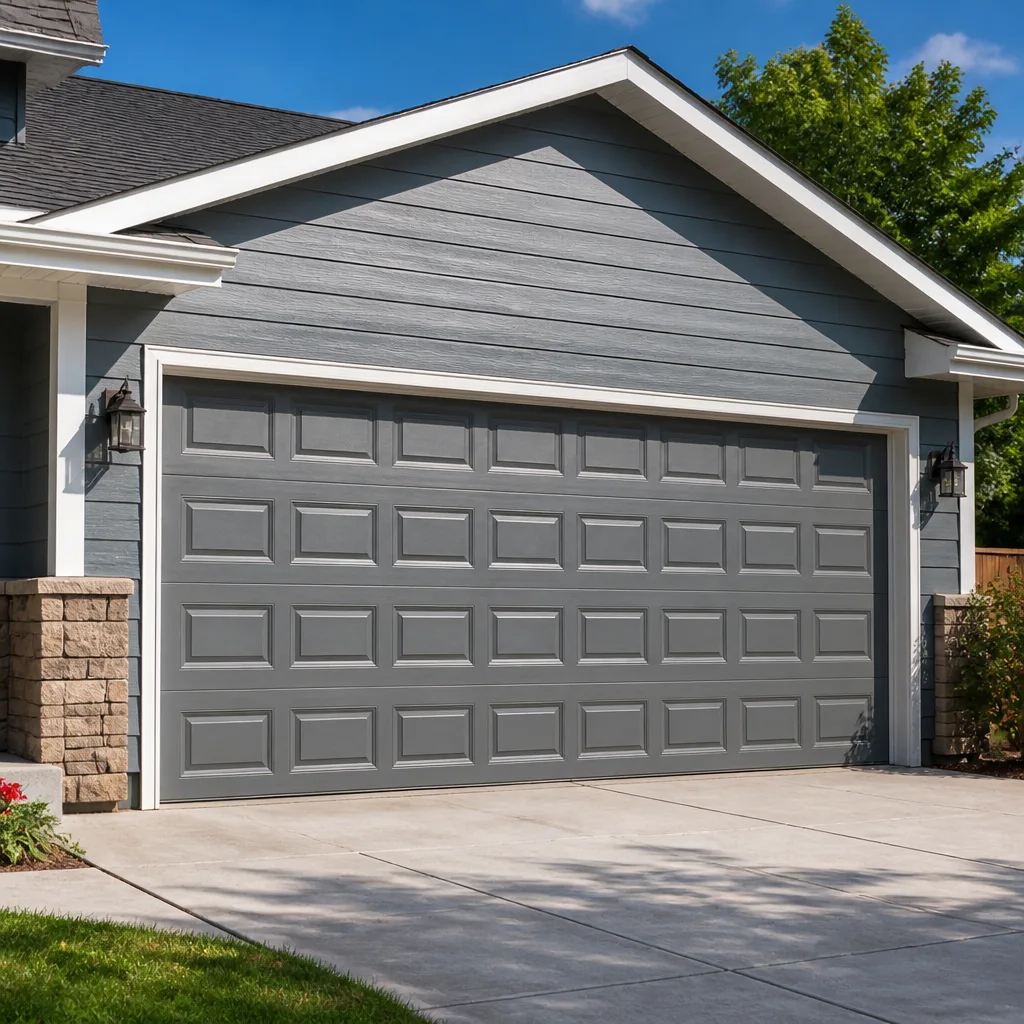 Raised-panel steel
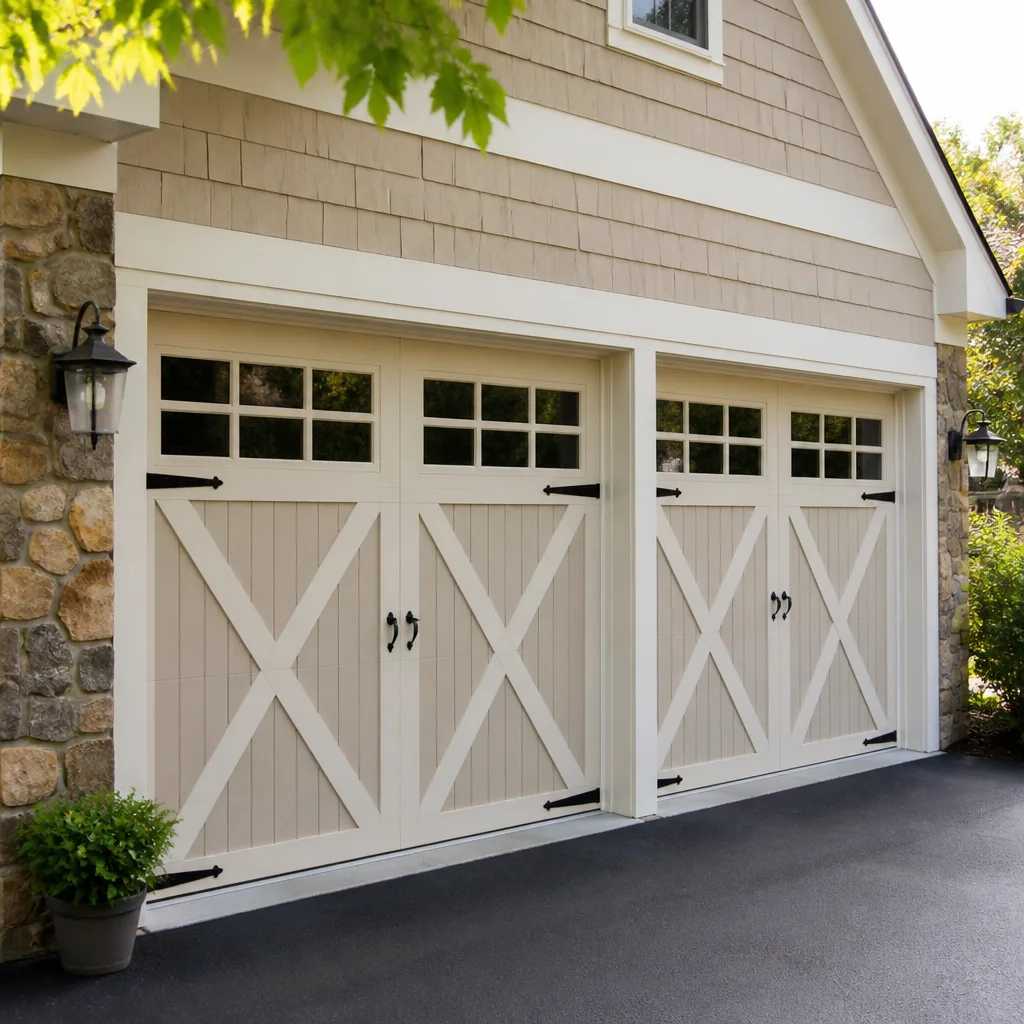 Carriage house
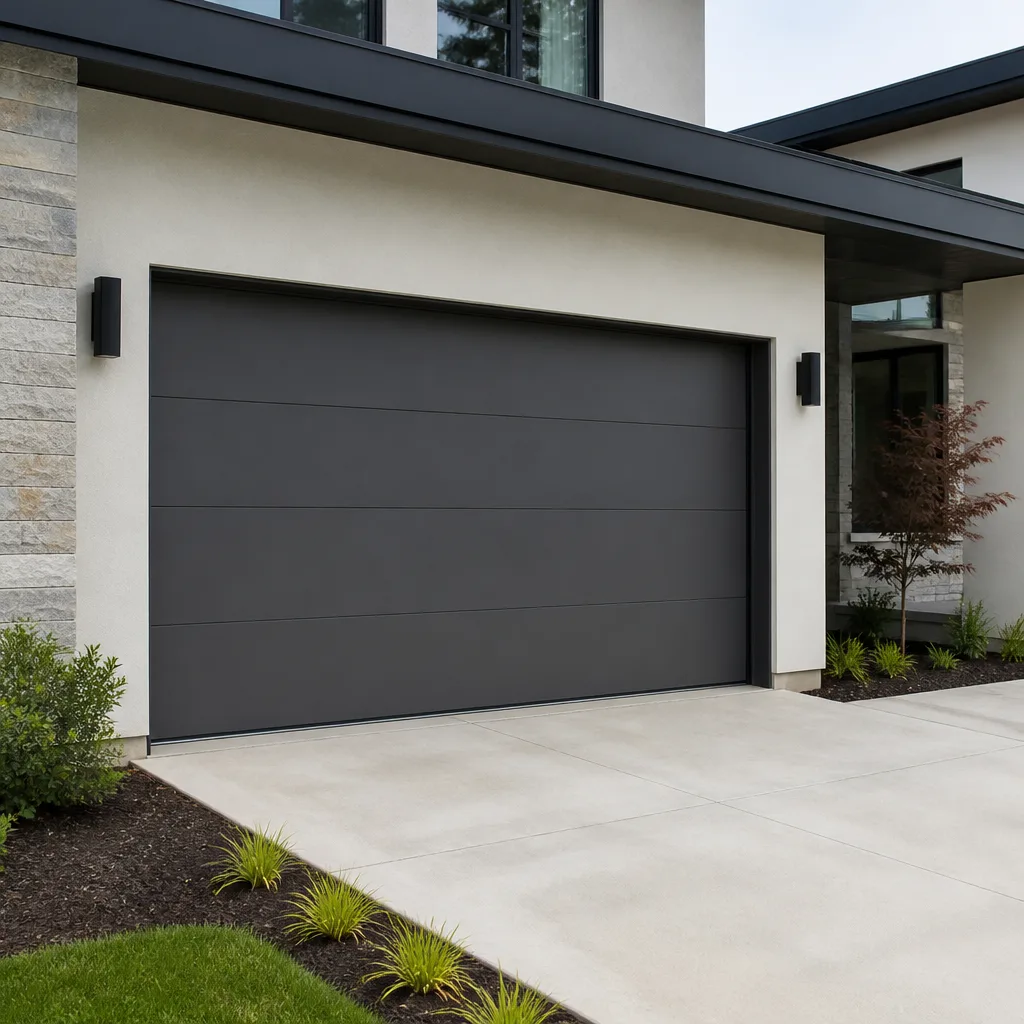 Modern flush
 Full-view glass
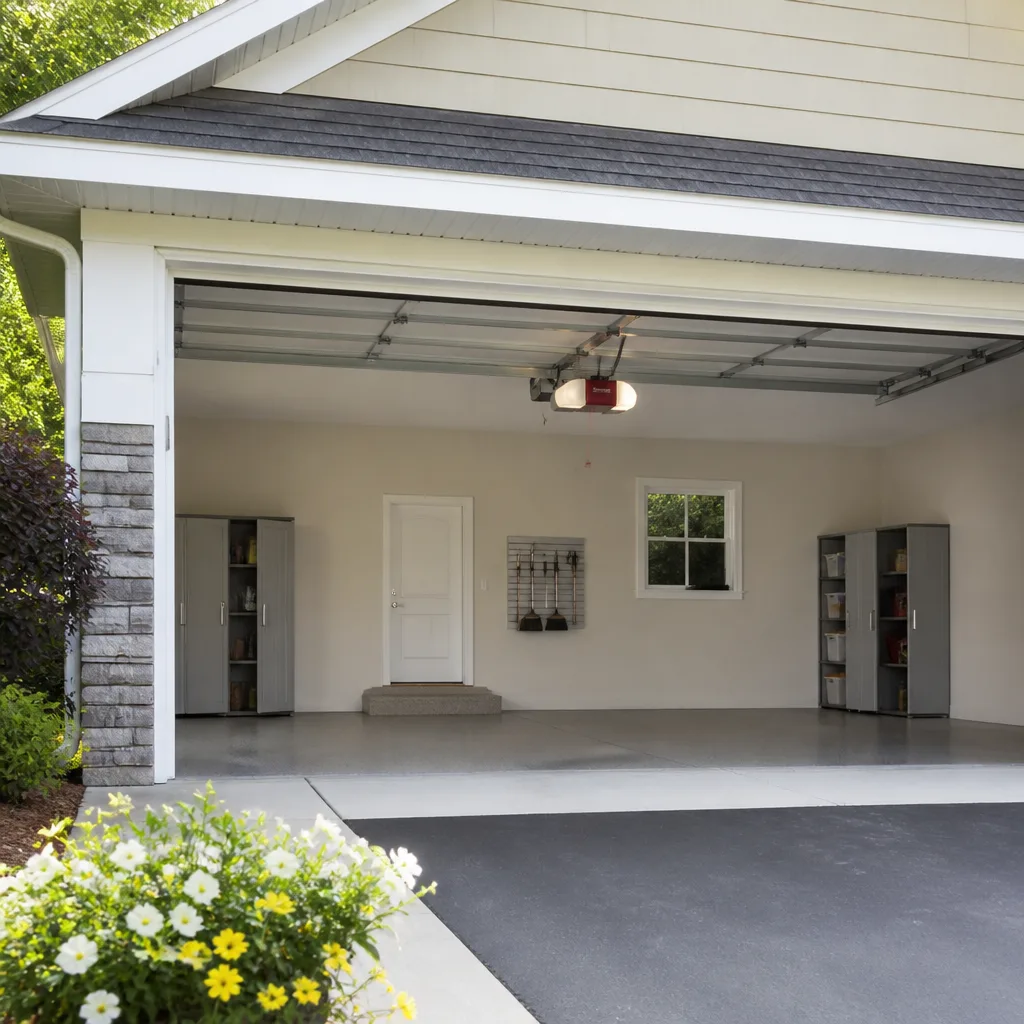 LiftMaster openers
 Chamberlain openers
Full 25-point door and opener safety check with every visit - springs, cables, rollers, tracks, and your LiftMaster or Chamberlain opener included
You get a price before we start. It does not change when the pro arrives.
Get your free estimateGarage Door Warning Signs: A Naperville Homeowner’s Reference Guide
A garage door that shudders on the way up is not the same emergency as a garage door that slams down faster than it should. Most warning-sign articles treat them identically, lumping a squeaky roller and a fraying cable into one vague “call a pro” recommendation. That’s not useful. It leaves homeowners over-reacting to minor issues and, worse, under-reacting to the dangerous ones. This guide splits every common garage door symptom into three severity tiers so you know exactly what to monitor, what to schedule, and what means stop using the door today. We’ve written it for the specific mix of homes and weather you find in Naperville.
Quick Answer
Garage door problems fall into three tiers. Tier 1 (monitor and schedule a service visit) covers squeaks, minor vibration, and slow opener response. Tier 2 (schedule within the week) covers a door that reverses before closing, a visibly sagging top panel, or an opener that strains on the way up. Tier 3 (stop using the door and call same day) covers a broken spring, a snapped or hanging cable, a door that won’t stay up, or a door that closes too fast. Anything that involves a spring or a cable is a hands-off problem for a trained technician.
Styles & brands we work with
- Raised-panel steel
- Carriage house
- Modern flush
- Full-view glass
- LiftMaster openers
- Chamberlain openers
Table of Contents
- The Three-Tier Severity System
- What the Sounds Tell You: Spring vs. Cable vs. Opener
- Spotting Torsion Spring Fatigue from the Floor
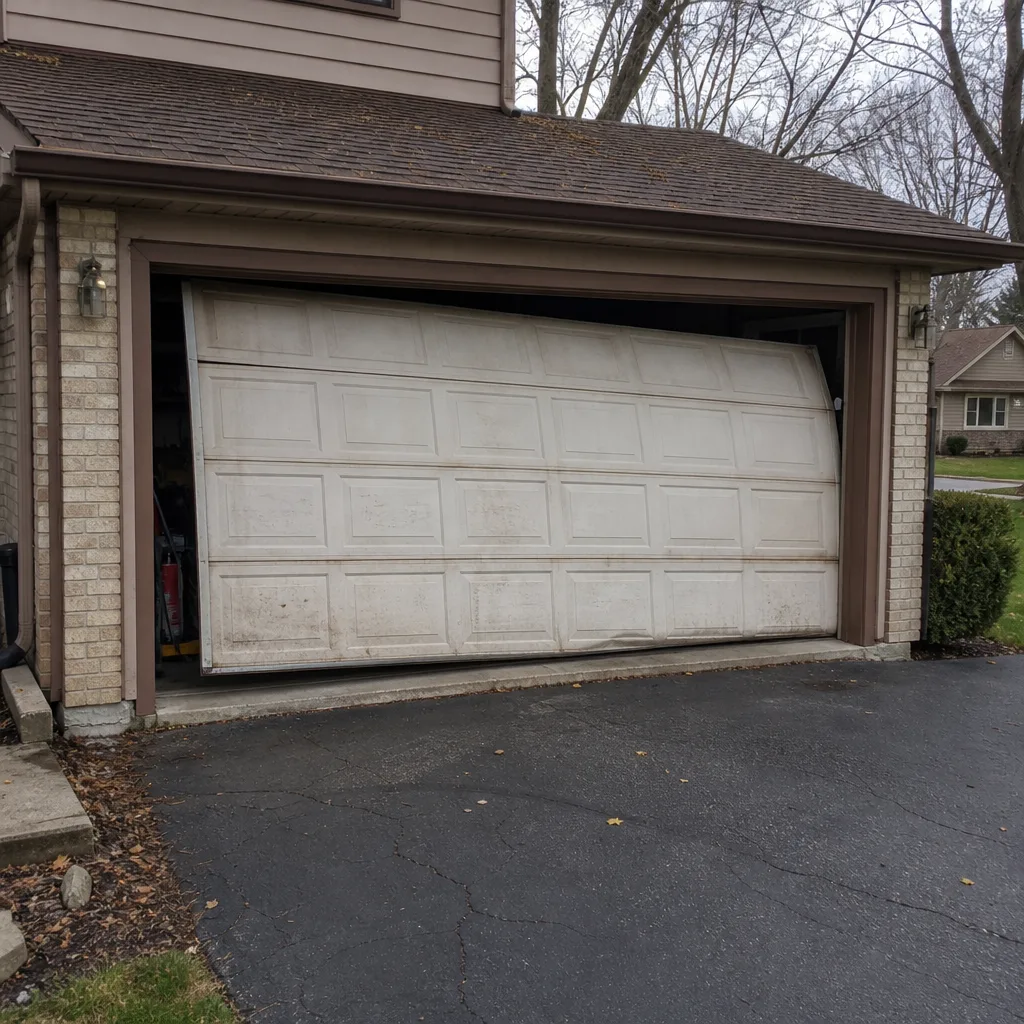
- Why an Uneven Door Is Never a Track Problem
- The Safety Reversal Test and What a Fail Actually Means
- Opener Warning Signs and Brand-Specific Quirks
- Naperville-Specific Factors: Weather, Housing, and Daily Use
- What Warning-Sign Repairs Typically Cost in Naperville
The Three-Tier Severity System
Not every symptom deserves the same response. The tiers below tell you how urgently to act. The logic is simple: if the failure could drop something heavy, trap a vehicle, or leave your home unsecured, it’s Tier 3. If the problem is degrading but still controlled, it’s Tier 2. If it’s cosmetic or early-stage, it’s Tier 1.
Tier 1: Monitor and schedule. These are annoyance-level signs. A light squeal from the rollers, a faint rattle at the top of travel, one slow opener response. The door still works and still reverses properly. Book a service visit when it’s convenient and mention the symptom so the technician arrives with the right parts.
Tier 2: Schedule within the week. Something is actively wearing. The door reverses partway down and won’t close, the top panel is visibly bowing, the opener strains and hesitates. This is the window where a repair is still small. Left alone through a Naperville winter, a tired spring or a binding roller turns into a Tier 3 call fast.
Tier 3: Stop using the door, call the same day. Any of the following means the door stays shut until a technician sees it:
- A loud bang from the garage followed by a door that won’t lift (almost always a broken torsion or extension spring)
- Any cable that is frayed, kinked, or hanging loose from its drum
- A door that closes faster than it opens, or drops the last few feet
- The door drifting down when you let go of it halfway up
- A door that has come off one track or is visibly off its rollers
Springs and cables are under extreme tension. Do not try to lift, prop, or adjust anything on a Tier 3 door yourself. Call a trained technician. In Naperville, a broken spring is one of the most common emergency calls we handle, and the fix is straightforward once the right size spring is on hand.
What the Sounds Tell You: Spring vs. Cable vs. Opener
You can often narrow down the cause before anyone comes out by describing the sound precisely. This matters on the phone: it helps us confirm whether the local professional needs a torsion spring, a cable set, or opener components in hand before arriving.
A loud metallic bang, one time, then silence. This is the signature of a torsion spring breaking. The door suddenly gets very heavy and the opener may run but not lift it. That’s Tier 3.
A sharp pop or twang during travel, followed by slack. That’s typically a cable snapping or coming off its drum. You may see the cable hanging on one side. Tier 3.
A rhythmic thunking or grinding that speeds up and slows with door travel. This points to worn rollers, dry hinges, or a track misalignment, not a spring or cable. Usually Tier 1 or Tier 2 depending on how much the door vibrates.
A grinding or whining noise from the opener unit itself while the door moves slowly. That’s inside the opener: worn gear, a failing logic board, or a straining motor. Craftsman and Chamberlain units with a plastic drive gear are a common source of this. It’s mechanical and it’s fixable; schedule it before it fails completely.
A rapid clicking from the opener with no door movement. The opener is trying but not getting power to the drive. That can be the opener, the safety sensors, or the wall control. Tier 2, because a door that won’t open locks you out of your own garage.
Spotting Torsion Spring Fatigue from the Floor
You can check most torsion spring wear without touching anything. Stand back and look up at the spring mounted on the shaft above the door. Here’s what to look for and what each sign tells you:
- A visible gap in the coil. A healthy torsion spring is a continuous wound coil. A gap or a clean break means the spring has failed. Do not operate the door. Tier 3.
- A noticeably stretched or sagging spring body. The spring should hold its shape. When it sags or looks unwound, it’s losing tension and will fail soon. Tier 2.
- Rust streaks or pitting on the coil. Rust weakens the steel and accelerates fatigue. Common in Naperville garages that cycle between humid summers and hard freezes. Tier 2: schedule a replacement before failure.
- Uneven color or paint loss along the coil. The spring is stressed in one section more than another. Have it checked.
- A door that lifts easily by hand but drops when you let go. If a door you used to be able to hold stays down on its own, the spring has lost tension. Don’t test this with the door fully open. Tier 3.
One more: listen. A torsion spring that is still intact makes almost no noise. A spring on its way out will sometimes creak or groan under load. If you hear that from the spring shaft, get it checked. Replacing a spring before it breaks is cheaper and safer than waiting for the snap.
Why an Uneven Door Is Never a Track Problem
This is the most common misdiagnosis. A garage door that sits lower on one side than the other is almost always a cable or drum problem, not a bent track. Here’s why.
The door is lifted by one of two systems: a torsion spring on a shaft with cables winding onto drums, or extension springs with two cables. Either way, the left and right sides are connected to the same spring system. If one side is higher, one cable has stretched, slipped on its drum, or is beginning to fail. The track just guides the door; it has no mechanism to make one side rise faster than the other.
Why the track gets blamed: a bent track can make a door stick, and it can look warped to the eye. But if the door runs without sticking and simply hangs crooked, the cause is up top.
What an uneven door means for you:
- One cable is carrying more load than the other. That’s a Tier 2 at minimum.
- If the door has drifted visibly (an inch or more) and the gap is growing, treat it as Tier 3. A failing cable can snap and let the door drop.
- Adjusting a track to fix an uneven door makes it worse. It moves the symptom, not the cause.
If you’re not sure, describe the crookedness to us on the phone and we’ll tell you what to check before anyone arrives. A reputable garage door company will ask about cable and drum wear first, not offer to “adjust the track.”
The Safety Reversal Test and What a Fail Actually Means
Every garage door opener sold in the US since 1993 has had a safety reversal feature, and it’s how the door is supposed to bounce back up if it meets resistance on the way down. Testing it is one of the few checks you can safely do yourself. Run it once a month.
- Close your door fully and clear the area under it.
- Lift the door by hand to about chest height, or use the wall control to fully open it, then get it moving down.
- During the down travel, place a solid object (a piece of wood, a brick) about the height of a shoebox directly on the ground in the door’s path.
- Watch. The door should reverse on contact with the object.
- Repeat with a light pressure test: run the down travel and press upward on the bottom edge with your hand. The door should stop and reverse.
If the door doesn’t reverse, don’t keep running it. That’s not a “call someone eventually” problem. The door is meeting the floor or an object and continuing to travel. On a modern door, that’s almost always a misaligned photocell (the small eyes near the floor on each side of the opening), a loose wire to the photocell, or a control board failure. On older units, it’s a mechanical force setting that has drifted.
Here’s the distinction most articles miss: a failing reversal test doesn’t necessarily mean the door itself is broken. It usually means the opener’s safety circuit has failed. That’s why we ask what the opener model is: whether you have a Raynor, LiftMaster, or older Craftsman unit changes how the fix is approached. This test takes five minutes and gives you a real answer.
Opener Warning Signs and Brand-Specific Quirks
Openers wear differently by brand and vintage. Knowing the likely failure mode on your unit helps you decide whether it needs a repair or a replacement.
LiftMaster and Chamberlain (same company, same parts lineage) are the most common residential units we see. Common warning signs: the door travels a few inches and reverses, or the opener runs a few seconds and shuts off. That’s usually a gear or logic board issue, not a motor failure. Belt-drive models (quiet but slightly slower) and chain-drive models (louder but tougher) have different part wear patterns.
Craftsman openers are common in older Naperville garages and known for plastic drive gears that strip over time. You’ll hear a grinding sound with no door movement, or the door gets progressively slower before it stops. That’s mechanical and repairable.
Raynor systems are less common in residential use but show up on premium installs. Their openers and doors integrate with proprietary hardware, so it helps to know the system before the technician arrives.
Signs your opener needs attention, in plain terms:
- The door gets slower every week
- It reverses before closing with no obstruction
- The wall control or remote works intermittently
- There’s a buzzing sound from the motor with no movement
For a full diagnosis, our garage door opener repair page covers the mechanics in more detail. The key point: an opener you had to replace 8 years ago may be fixable rather than due for replacement, and a technician who knows your brand can tell quickly.
Naperville-Specific Factors: Weather, Housing, and Daily Use
Naperville sits in a climate of hard freeze-thaw cycles, humid summers, and occasional ice storms. That weather profile changes what you should watch for.
Freeze-thaw and door rollers. A door that squeals a little in winter and quiets down in spring is often a track or roller issue that’s exposed to temperature expansion. A door that starts noisy in summer and stays noisy is more likely a real wear problem.
Frost heaves. The ground shifts with the seasons. That can move a bottom panel, throw off the vertical track, or make the opener’s travel limits drift. If your door suddenly doesn’t close the last inch in February, that’s often an adjustment issue, not a broken spring.
Housing stock. Naperville homes range from newer construction to established neighborhoods where doors and openers have seen multiple replacement cycles. In older homes, we see more extension-spring systems and older Craftsman openers. In newer builds, we see more LiftMaster and Chamberlain belt-drive units and more integrated smart controls. Telling us what you have shortens the conversation considerably.
Daily use. If your garage is your primary entry, your door cycles many times a day. Every open is one more cycle on the spring and one more on the opener gear. A door that gets used twice a day has a very different wear profile from one that gets used a dozen times. More cycles means check the reversal test more often.
What Warning-Sign Repairs Typically Cost in Naperville
Repair costs are estimates per job, and the written quote sets the final price. Here’s what we typically see for the warning-sign issues this guide covers, using ranges supplied to us for the Naperville market.
Spring repair. A single torsion spring repair is typically in the $180-$340 range. Since matched pairs are almost always replaced together for even tension, expect a full pair to run roughly double that. The broken spring is the most common emergency call we see, and pairing them prevents the second one from failing months later.
Cable and drum repair. Cable replacement and drum adjustment usually fall in the $90-$250 range per side depending on the system. A cable that slipped its drum can often be reseated and adjusted within the lower end.
Roller and track work. Roller replacement and track adjustment tends to run $80-$200 depending on how many rollers are replaced and whether the track needs re-alignment.
Opener repair. Gear replacement, logic board, sensor, or drive replacement typically run $100-$300. A full opener replacement ranges higher, but a repair on a unit with good hardware is often the better call.
| Repair type | Typical estimate |
|---|---|
| Single torsion spring | $180-$340 |
| Matched spring pair | About 2x the single-spring price |
| Cable and drum | $90-$250 per side |
| Rollers and track adjustment | $80-$200 |
| Opener repair | $100-$300 |
Every estimate is free, and every price is quoted and agreed before any work starts. If what you’ve described on the phone turns out to be something else once the technician sees it, you get a revised quote before anything is touched. No surprise invoices.
For a full breakdown of repair options across all five services, see our main garage door repair page.
Common Mistakes to Avoid
- Treating every noise as a crisis. A single squeak is rarely urgent. Spending an emergency call on a squeaky roller when a spring check is what you actually need wastes money and time. Use the tiers.
- Ignoring an uneven door. The most common mistake. A crooked door means a cable is stretching. It’s Tier 2 now, Tier 3 later. Get it looked at before winter.
- Adjusting a track to fix a crooked door. It doesn’t fix the cause and it can misalign the door further. Cable and drum work is the actual remedy.
- Running a door that failed the reversal test. It isn’t a minor annoyance. It’s a safety circuit failure. Stop operating it until it’s checked.
- Lubricating springs and cables. Don’t. Springs and cables are tension components, not service points. Spraying them can attract grit and mask a problem.
- Not knowing your opener brand. In Naperville, we see LiftMaster, Chamberlain, Craftsman, and Raynor all the time. Knowing yours means the right parts show up on the first visit instead of the second.
- Waiting until a spring breaks to replace it. If you’ve noticed visible rust on the coil or the door no longer holds itself up, the spring is on its way out. Replacing it on schedule avoids the 7 a.m. emergency.
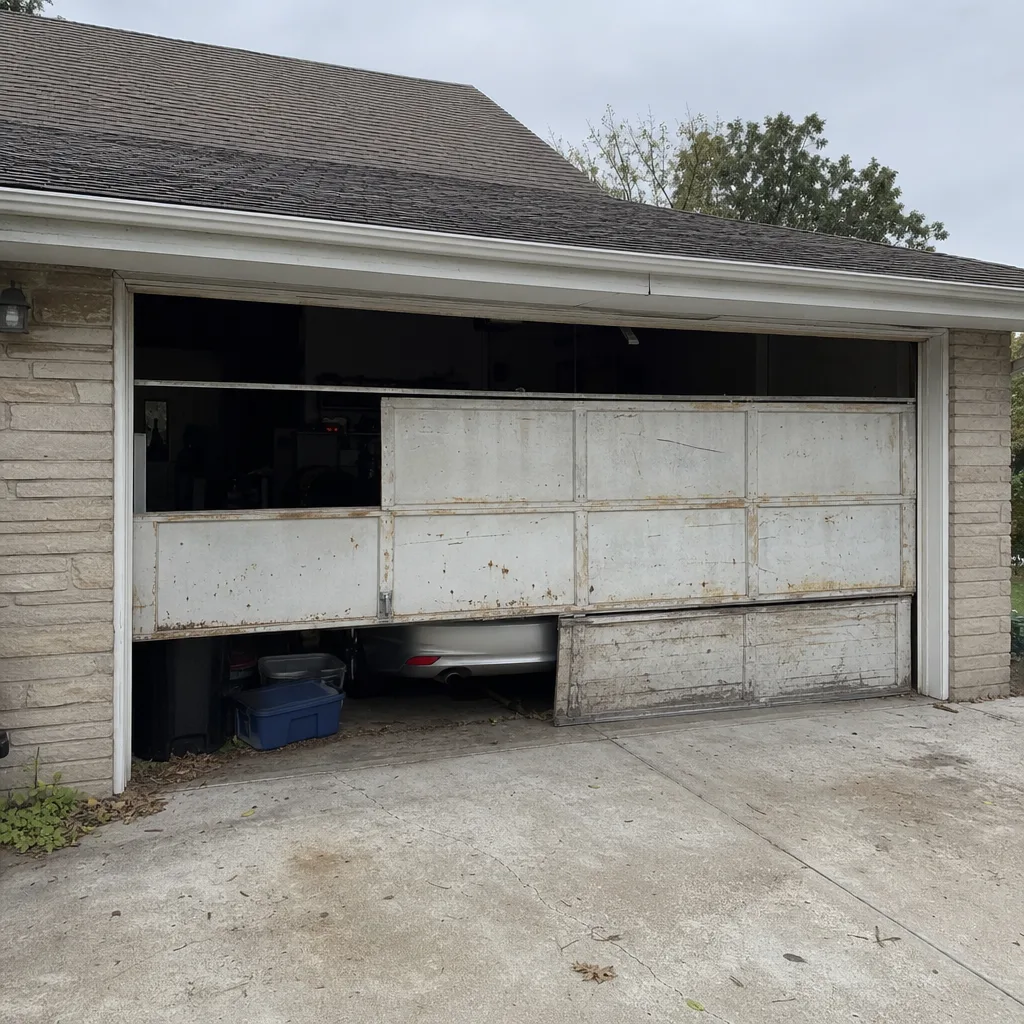
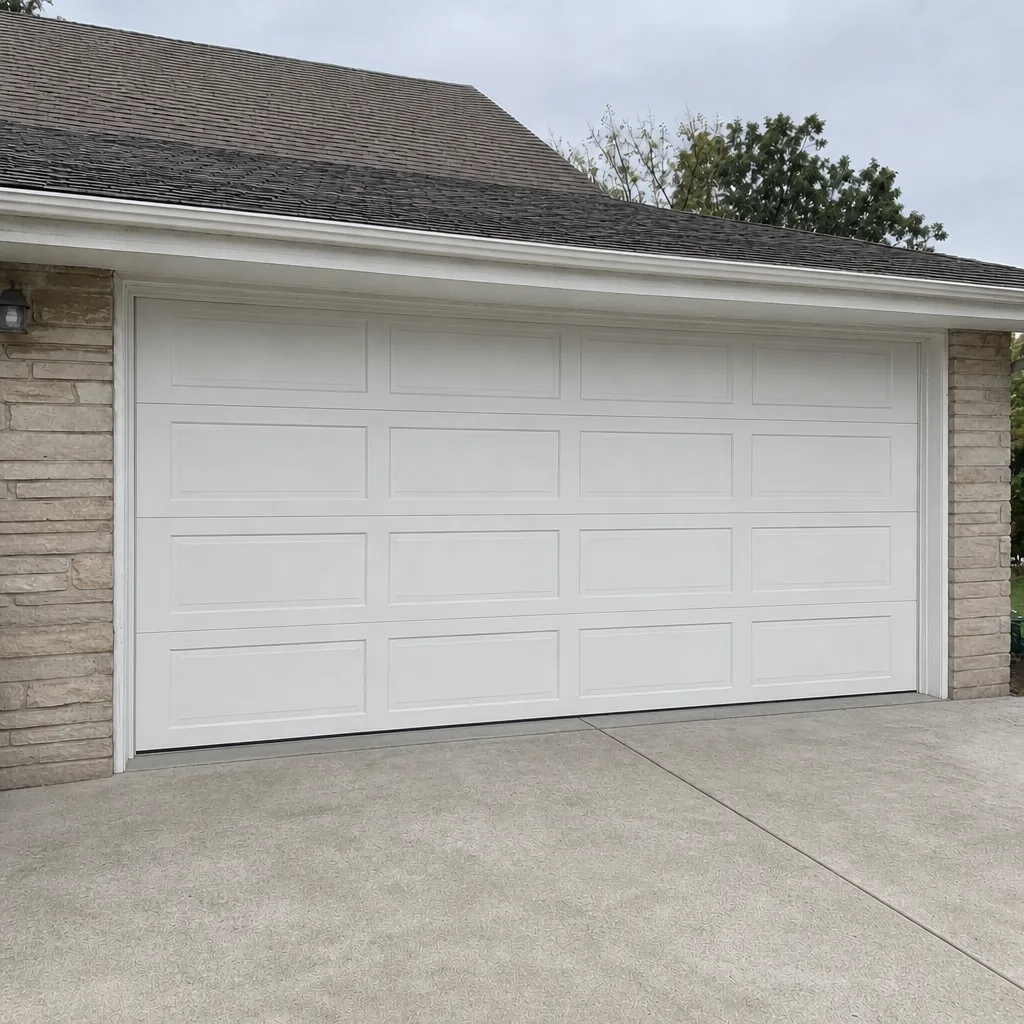
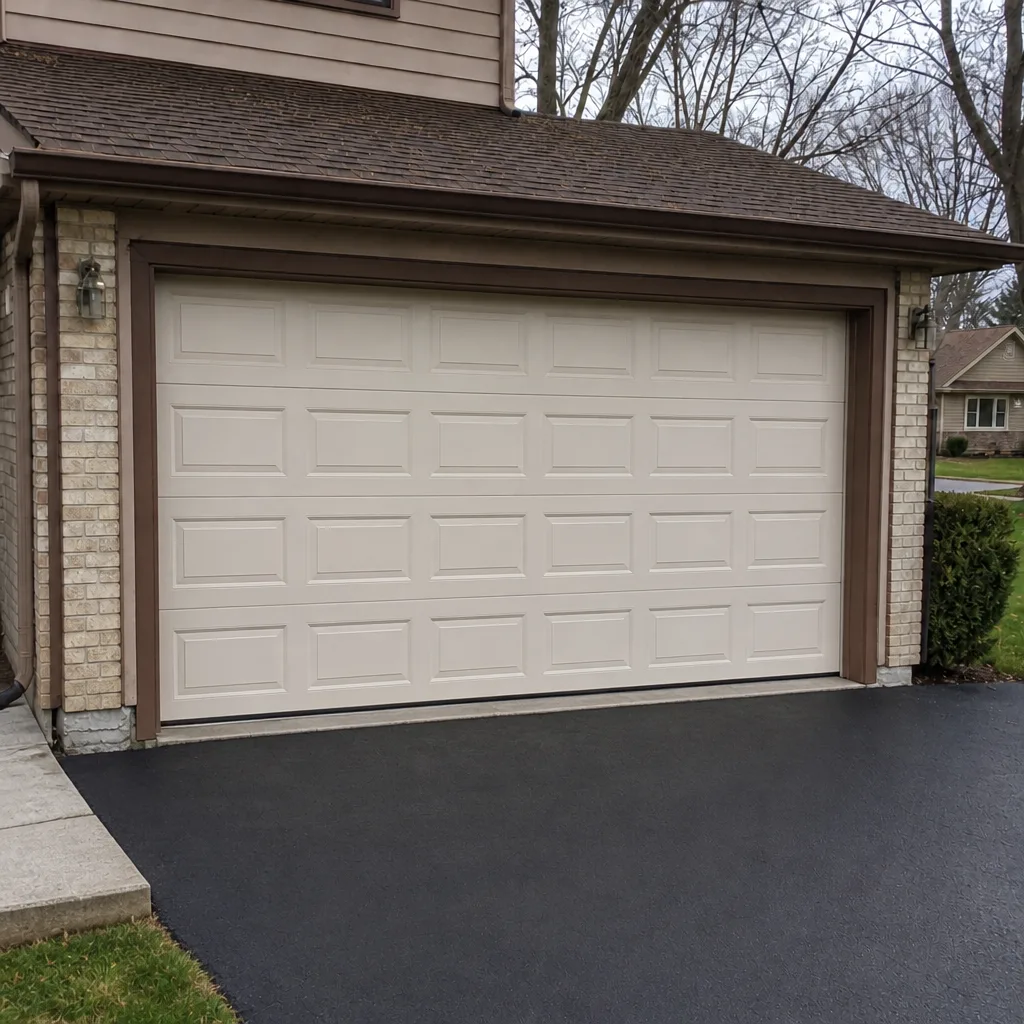
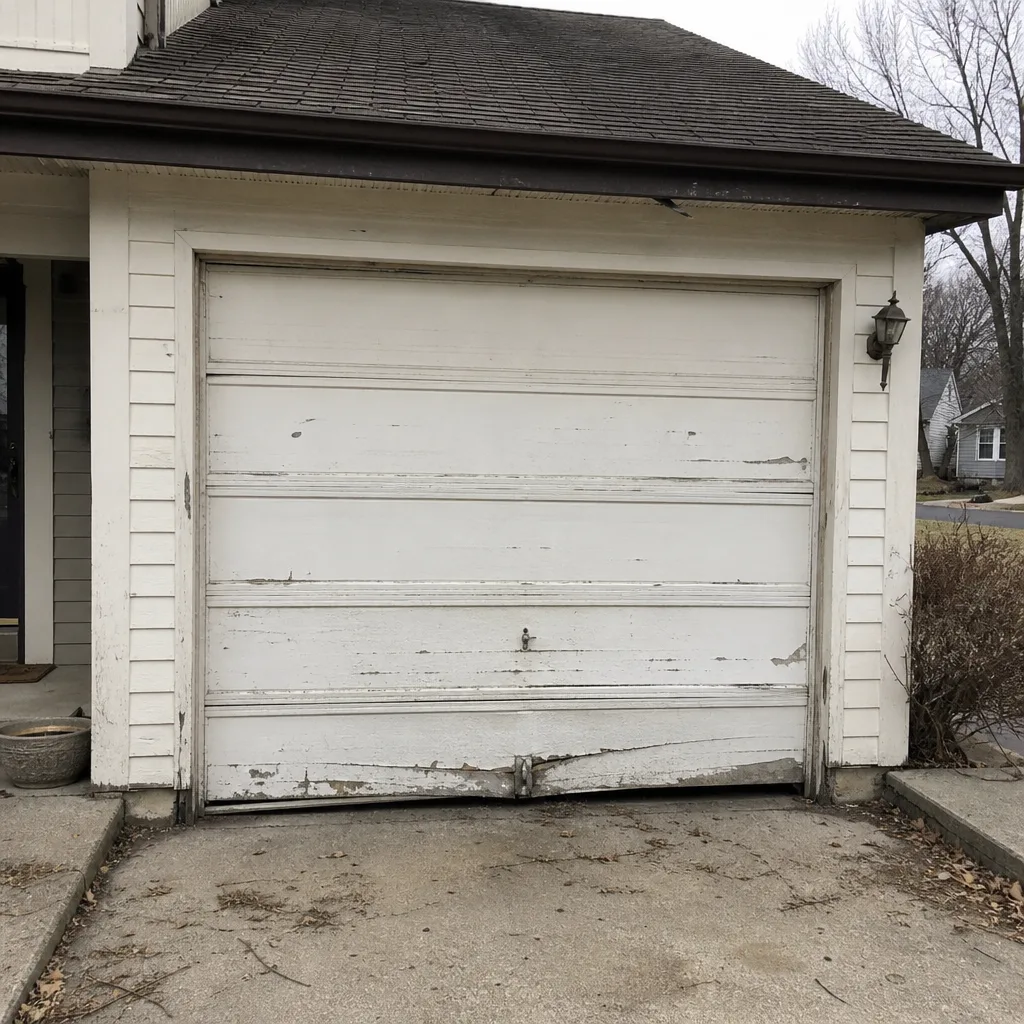
See the difference
 Before
 After
 Before
 After
 Before
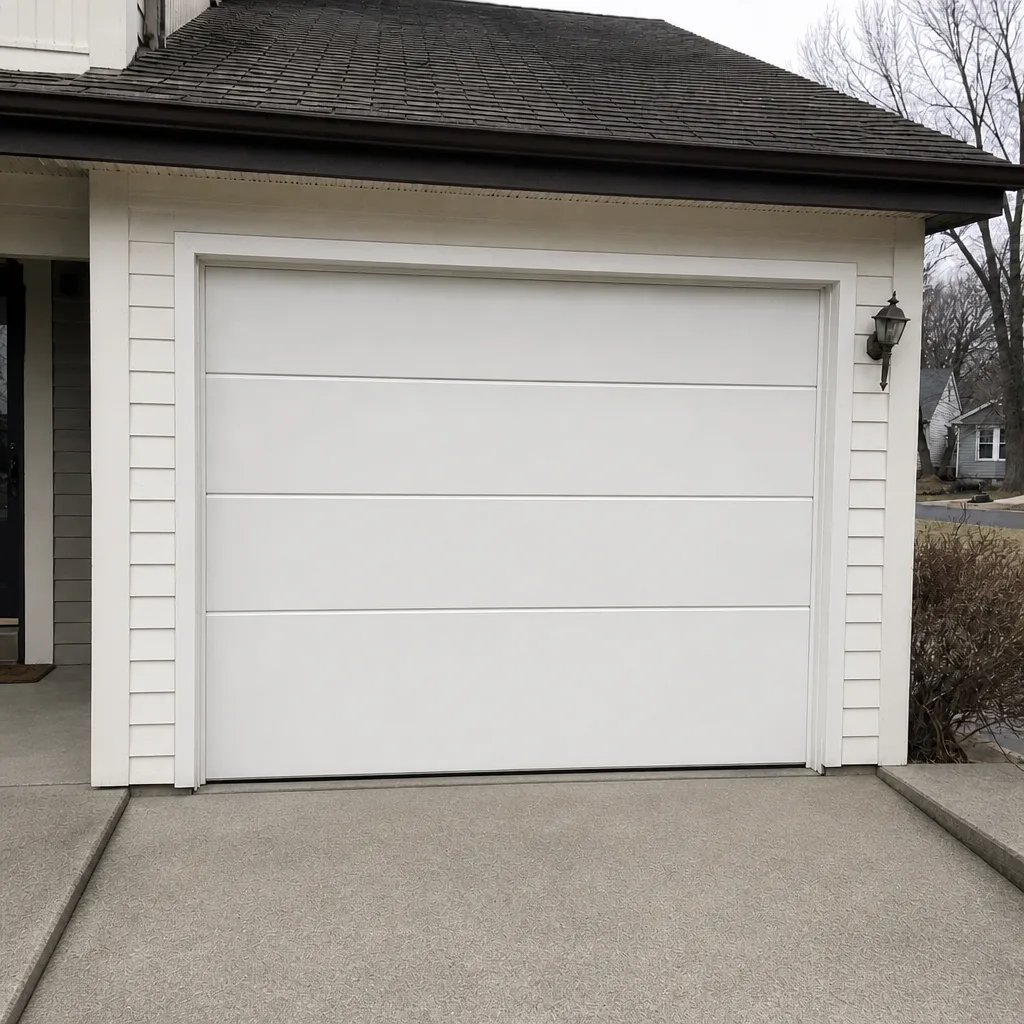 After
When to Call a Professional
Call a professional the same day if you hear the bang of a broken spring, see a cable hanging loose, find the door drifting down when you release it, or the reversal test fails. Schedule within the week for an uneven door, a straining opener, or any Grinding sound that gets worse. Tier 1 squeaks and rattles can wait for a scheduled service visit. In all cases, tell us the brand of your door and opener on the call so the first visit is the right one.
Naperville Garage Door Repair Co offers free estimates in Naperville. Call (833) 513-8805. We answer 24/7. Fast dispatch from 7am to 7pm, Sunday through Friday. Our technicians have up to 13 years of experience, and we’re factory-familiar with LiftMaster, Chamberlain, Genie, Clopay, Amarr, Wayne Dalton, Craftsman, and Raynor. If you’re thinking about a replacement door, our garage door installation page covers the selection and measurement process.
Frequently Asked Questions
The most common warning signs are a door that shudders or squeals on the way up, a door that reverses before closing, an opener that strains or gets slower, an uneven door, and any visible rust on the torsion spring. Freeze-thaw weather in Naperville makes springs and cables the most frequent failure points, and heavy daily use shortens their life. Call (833) 513-8805 and describe the symptom: we can usually tell you which tier it falls into before the technician arrives.
A single torsion spring repair in Naperville is typically $180-$340. Matched pairs are usually replaced together, so a pair costs about twice that. The written estimate sets the final price, and the estimate is free. Call (833) 513-8805 for an exact quote.
No. The price is quoted and agreed before any work starts. If the technician finds something different from what was described on the phone, you get a revised quote before anything is touched. Call (833) 513-8805 to book a free estimate.
The local professionals we connect you with are licensed and insured as their state requires. We work to keep the right people on hand for the job you need. Call (833) 513-8805 to discuss your door.
Yes. Same-day service is available for garage door emergencies including broken springs, snapped cables, and doors that won’t close. Call (833) 513-8805. We answer 24/7. Fast dispatch from 7am to 7pm, Sunday through Friday. A call outside dispatch hours is booked into the next opening. For non-emergency repairs, the estimate is free and there’s no service-call fee.
A crooked door is almost always a cable or drum problem, not a track problem. One cable has stretched or slipped, and it’s putting the load on the other side. That’s a Tier 2 problem that gets worse as the cable wears. Get it checked before the next hard freeze. Call (833) 513-8805. Our Naperville Garage Door Repair Co team handles cable and spring work as a dedicated service.
The Bottom Line
Garage door warning signs sit on a spectrum from cosmetic to dangerous, and the useful question is always which tier you’re in. Squeaks and slow opener response are Tier 1; uneven doors and failing reversal tests are Tier 2; broken springs, loose cables, and too-fast closures are Tier 3 and need the door shut until someone trained looks at it. The reversal test and a visual check of the torsion spring are the two things you can safely do yourself. Everything that involves a spring or cable should be left to a professional who knows the parts and brand on your door. Call (833) 513-8805 for a free estimate; we’ll tell you the tier before we ever touch the door.
Written by the team at Naperville Garage Door Repair Co.