
Last updated November 23, 2026
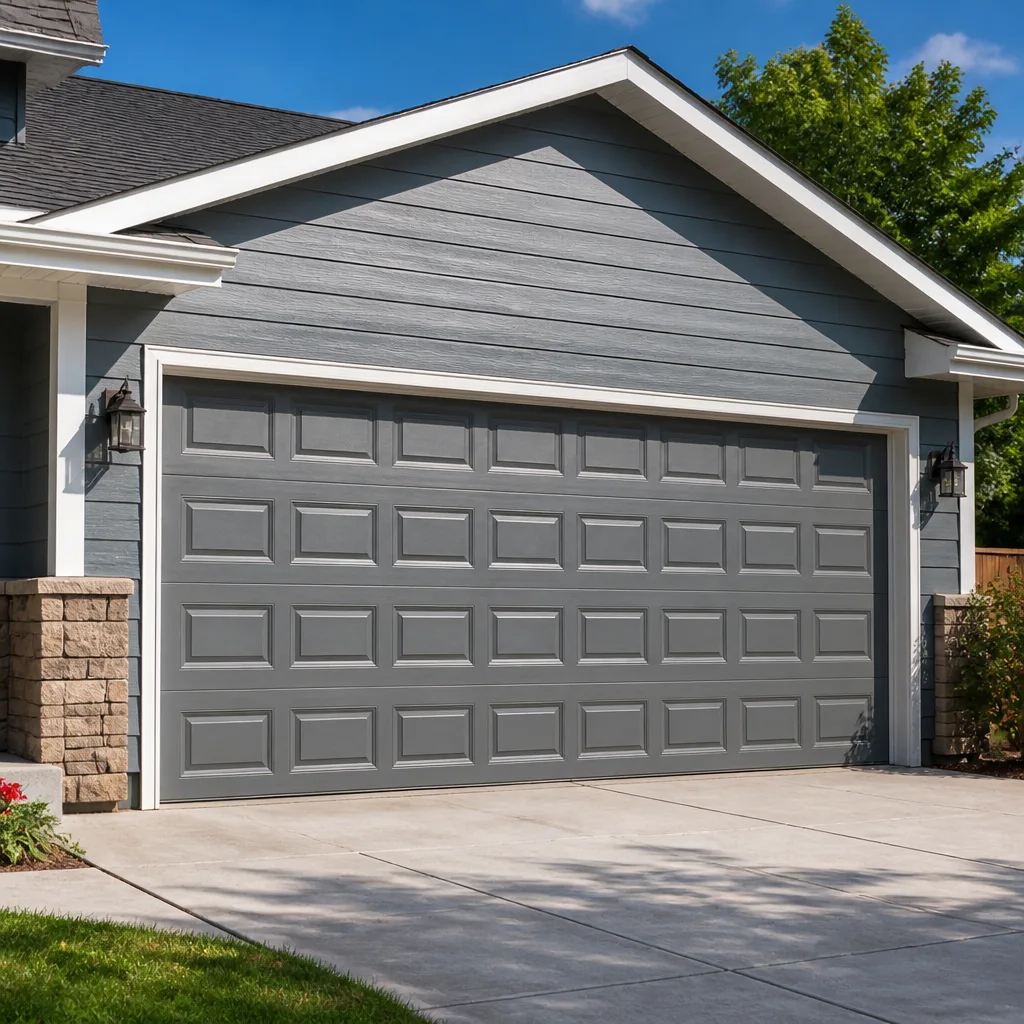 Raised-panel steel
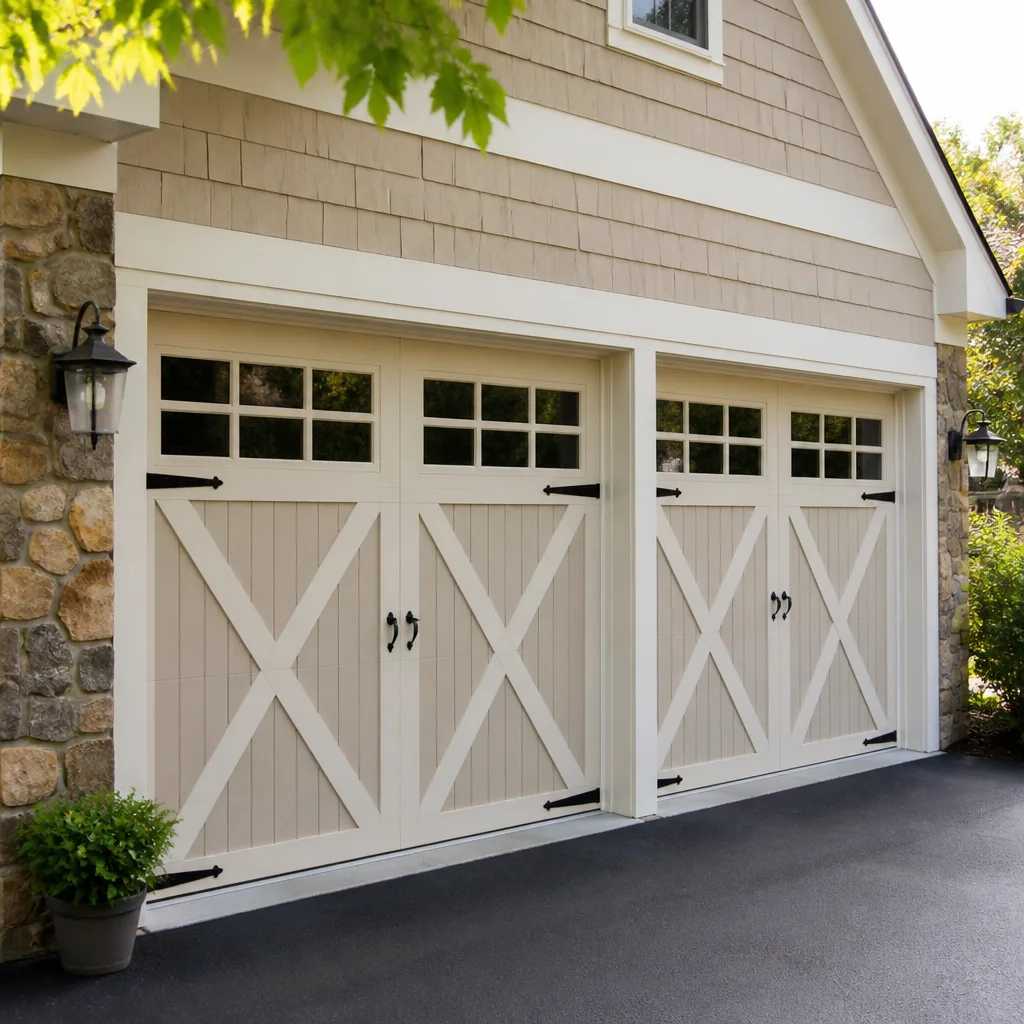 Carriage house
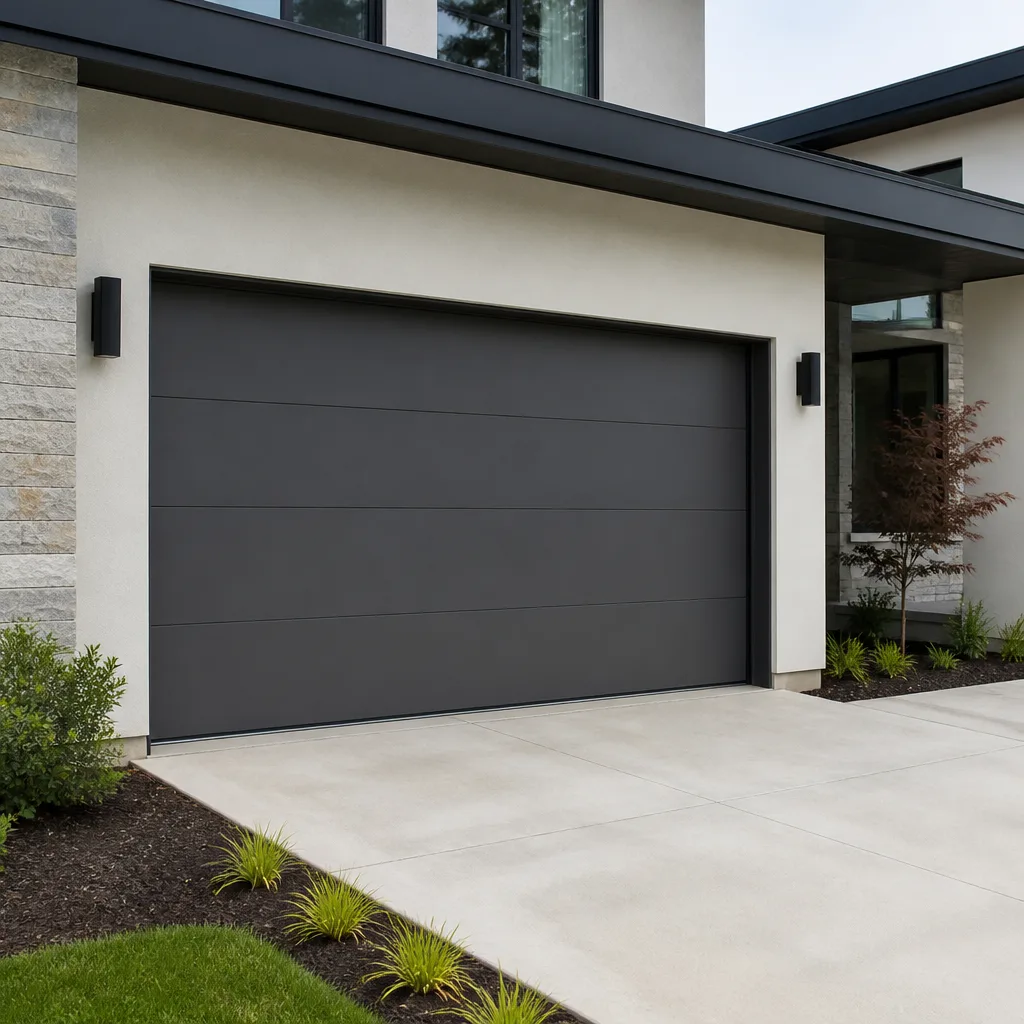 Modern flush
 Full-view glass
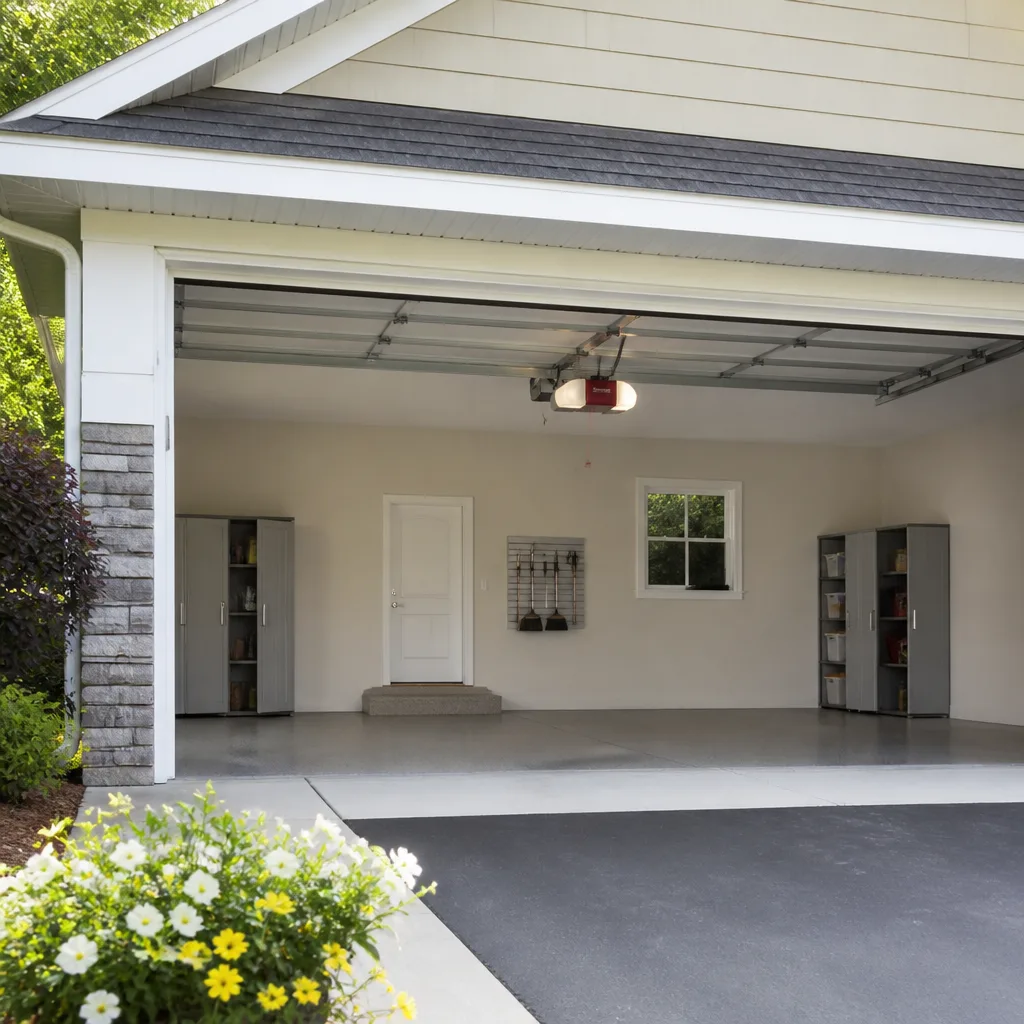 LiftMaster openers
 Chamberlain openers
Full 25-point door and opener safety check with every visit - springs, cables, rollers, tracks, and your LiftMaster or Chamberlain opener included
You get a price before we start. It does not change when the pro arrives.
Get your free estimateDIY vs Professional Garage Door: The Naperville Homeowner’s Decision Guide
Most garage door advice treats “DIY or call a pro” as one question with one answer. It isn’t. The honest answer depends entirely on which part of the door you’re touching. Replacing a bottom weather seal yourself is a reasonable project for a Saturday afternoon. Replacing a torsion spring puts you in the same risk category as opening a live electrical panel, because the physics don’t care how careful you are or how good the tutorial was. This guide draws hard lines task by task, based on injury risk, tools required, and what happens to your warranty. You’ll learn which jobs are genuinely safe to handle, which ones are a physics problem rather than a skill problem, and how a Naperville homeowner should think through the call.
Quick Answer
You can safely DIY a garage door’s weather seal, exterior handle, keypad battery, and routine lubrication. You should never DIY torsion springs, extension springs, cables, or track realignment, because those parts store enough energy to cause serious injury and require tools and training most homeowners don’t have. Opener installation sits in a middle zone: physically possible for a handy homeowner, but it can affect the manufacturer’s warranty and safety-reverse settings. Everything else is a judgment call on tools, time, and comfort.
Styles & brands we work with
- Raised-panel steel
- Carriage house
- Modern flush
- Full-view glass
- LiftMaster openers
- Chamberlain openers
Table of Contents
- Why Garage Door DIY Is a Risk Assessment, Not a Philosophy
- The Task-by-Task Breakdown: What’s Safe and What Isn’t
- The Physics of a Wound Torsion Spring
- Warranty Implications of DIY Opener Installation
- The Cost Math When DIY Becomes a Professional Job
- The One Genuinely Good DIY Job: Lubrication Done Right
- Naperville-Specific Considerations
- Common Mistakes to Avoid
Why Garage Door DIY Is a Risk Assessment, Not a Philosophy
A garage door is the largest moving object in your home, and it operates under tension every single day. That means the DIY question isn’t about whether you’re the kind of person who fixes things. It’s about whether the specific task in front of you involves stored energy, precise mechanical alignment, or a system where a small error causes a failure weeks later. Some do. Some don’t.
We’ve seen the same pattern play out across Naperville homes. A homeowner replaces a bottom seal and saves themselves a service call. Good outcome. A different homeowner watches a spring tutorial, gets the winding bars halfway in, and realizes the door is now heavier than it was an hour ago with no safe way to back out. Those two jobs look similar on a screen. They’re nothing alike in your garage.
Here’s the frame that works: separate every garage door task into three buckets.
- Green (safe to DIY): Bottom weather seal, exterior lift handle, keypad battery, remote battery, visual inspection, and lubrication.
- Yellow (possible but consequential): Opener installation, roller replacement on a door you can safely lower, and light track adjustment on a door that’s fully down.
- Red (never DIY): Torsion springs, extension springs, cables, drum replacement, and full track realignment after a door has come off the rails.
The red bucket shares one trait: stored energy or cable tension that can release without warning. No tutorial changes that. The green bucket shares the opposite trait: if you do it wrong, the worst case is a drafty door or a handle that needs re-tightening. Naperville homes built in the 1990s and 2000s commonly have doors that are now 20 to 30 years old, and those doors are where the difference between green and red tasks becomes clearest. Old hardware fails, and the failures tend to happen mid-job.
The Task-by-Task Breakdown: What’s Safe and What Isn’t
Here’s the definitive list we’d give a neighbor. Read it before you buy tools.
- Bottom weather seal – DIY: A rubber or vinyl strip that slides into an aluminum retainer. No stored energy. If you cut it long and trim after installation, the job is nearly foolproof.
- Exterior lift handle – DIY: Two bolts. The only risk is lifting the door at the wrong point, so have someone help you keep the door down while you work.
- Keypad or remote battery – DIY: One screwdriver, one battery. Nothing else to consider.
- Routine lubrication – DIY: Covered in its own section below. High value, low risk.
- Visual inspection – DIY: Look at springs, cables, rollers, and hinges. You’re not repairing anything, just noting what you see.
- Roller replacement – Yellow: Doable on a door that’s fully closed and stable, but only if the roller bracket isn’t under tension. If you’re not sure, stop.
- Opener installation – Yellow: Physically manageable, but the safety-reverse settings and force limits need to be tested correctly, and there’s a warranty question.
- Torsion spring replacement – Red: Never DIY. The spring stores enough energy to break bones or worse.
- Extension spring replacement – Red: Same rule, different geometry. Extension springs under a fully closed door carry hundreds of pounds of stored force.
- Cable replacement – Red: Cables are the most dangerous part of the system because they can fail while you’re near them and are almost always under tension when you touch them.
- Track realignment – Red: If a door has come off the rails, the door’s weight distribution is unpredictable. Don’t attempt to push it back in.
The mechanical reason for the line is straightforward. The green tasks touch components with no stored energy. The yellow tasks touch components where correct installation depends on measurements most homeowners don’t have tools for, like the opener’s force limits and the door’s balance point. The red tasks touch components where a failure releases energy at the wrong moment, in the wrong direction. That’s not a skill question. It’s a “what’s physically happening inside that metal coil” question.
If you’re staring at a red task, our garage door repair team handles exactly those jobs. The important thing to remember is that the red bucket is also where emergency calls happen most often, because springs and cables fail without notice. When they do, the door is down or the door is stuck, and that’s the moment to stop and call.
The Physics of a Wound Torsion Spring
Here’s the number that changes how most people think about spring replacement: a single wound torsion spring on a standard residential door stores energy in the range of several hundred foot-pounds. To put that in concrete terms, the force is roughly what a small motorcycle engine produces, concentrated into a metal coil that can release it in a fraction of a second. That’s why spring replacement is measured in physics, not in DIY confidence.
The comparison we use: a live electrical panel and a wound torsion spring have the same design principle. Both hold energy in a system designed to keep it contained, and both become dangerous when the containment is interrupted at the wrong moment. Electricians wear insulated gloves and work to a fixed sequence for a reason. Garage door technicians use winding bars, a controlled sequence, and a door that’s fully down for the same reason.
What happens on a DIY attempt that goes wrong:
- The homeowner gets the winding bars in and the spring starts to unwind before they’re ready.
- The door, now unbalanced, drops or slams down hard, bending the bottom section or cracking the panel.
- The homeowner steps back and the door settles on one side, twisting the tracks.
- By the time they call, the spring, one or two cables, and at least one track section need replacing.
That cascade is why we offer spring repair as a named service rather than a catch-all “repair” line item. It’s the highest-risk part of the door, and it deserves a specialist. Our technicians have up to 13 years of experience, and spring work is the reason that experience matters. On a Naperville door built in the 1990s, the spring may be paired with aging cables and drums, so a full spring-and-cable replacement is often the smarter call than a spring alone. We’ll tell you which applies to your door, and the written estimate sets the price before any work starts.
Warranty Implications of DIY Opener Installation
This is the part of the DIY conversation most homeowners don’t hear until it’s too late. If you install a new opener yourself and the unit fails later, several major brands – including LiftMaster, Chamberlain, and Genie – treat homeowner-installed units differently in certain failure scenarios. The unit’s warranty doesn’t automatically cover every failure mode after a DIY install, particularly when the failure traces back to incorrect force settings, an unbalanced door loading the motor, or a safety-reverse system that was never tested correctly.
That’s not a reason to be afraid of the tools. It’s a reason to know exactly what could go wrong.
- Force settings: A new opener needs its force limit set to match the door. Set too high and the door will keep going if it hits something. Set too low and the opener reverses at odd points or fails to lift the door at all.
- Safety-reverse test: The opener’s reversing mechanism has to be verified with a test object under the door. If it doesn’t reverse, that’s a serious safety problem you’ve now installed.
- Balance check: An unbalanced door puts extra load on the opener motor. That load is exactly what manufacturers point to when they evaluate a failure claim.
If your opener is from LiftMaster, Chamberlain, Genie, or Craftsman, our garage door opener repair team works on those systems every week. We know the force-setting procedures for smart and Wi-Fi units, DC belt drive, and legacy chain-drive models across multiple product generations. If you’re unsure whether your existing opener can be safely re-used with a new door, or whether a new unit is the better call, we can advise before you buy anything. And if you’re replacing an old door and opener together, garage door installation covers the full job, including the brand matching that keeps the warranty path clean.
One more thing about brands. If you’ve got a Clopay, Amarr, Wayne Dalton, or Craftsman door and opener combination, that’s a familiar setup in Naperville. Reach out and we’ll confirm what’s on your door before any work is quoted, so there’s no guesswork on either side.
The Cost Math When DIY Becomes a Professional Job
Here’s a pattern worth internalizing: when a homeowner damages additional components trying to DIY a repair, the final bill is typically 40 to 60 percent higher than the original professional quote would have been. That range isn’t a scare tactic. It reflects what actually gets damaged in a DIY attempt that goes sideways.
The typical chain works like this:
- Homeowner tries a repair (most often a spring, cable, or track job).
- The door becomes unbalanced or drops, bending the bottom panel or a hinge.
- One or both cables are now kinked or off the drum.
- At least one track is bent and needs to be replaced, not adjusted.
- The final ticket includes the original job plus the parts and labor to correct the damage.
The 40 to 60 percent figure we mention reflects the added scope of work, not a surcharge. Nobody pays more for the same repair. They pay for a bigger repair. That’s a meaningful difference and it’s worth being honest about.
Some of this added cost has a local flavor. Naperville doors that have been on the same home since the 1990s often have older hardware that was marginal before a DIY attempt and fails during one. If a bottom panel is bent, matching a replacement panel to a Clopay or Wayne Dalton door from that era can take a few days of lead time, which extends the repair window. That’s not a reason to avoid fixing the door; it’s a reason to get the repair right the first time.
For context, a typical spring repair is a smaller line item than most homeowners expect. Our guide prices are set per job by the written estimate, and the estimate is free. The math usually favors professional service on red-bucket tasks and favors DIY on green-bucket tasks. That’s the whole calculation.
The One Genuinely Good DIY Job: Lubrication Done Right
If you do one maintenance task yourself, do this one. Proper lubrication extends the life of hinges, rollers, and springs, reduces the noise most Naperville homeowners complain about first, and cuts down on the frequency of professional service visits. It’s also nearly impossible to do damage.
Product specification first. Use a white lithium grease or a silicone-based garage door lubricant. Spray white lithium grease is fine for hinges and rollers. For the spring itself, use a lubricant labeled for garage door springs; some white lithium sprays are too thick for a torsion spring and will attract dirt over time. Avoid WD-40 as a long-term lubricant on the moving parts – it’s a penetrating oil, not a grease, and it washes out. Avoid motor oil and cooking spray.
The job, step by step:
- With the door fully closed, wipe down hinges and rollers with a dry cloth to remove dust and old grease.
- Spray a small amount of white lithium grease onto the pivot points of each hinge. One short burst per hinge is enough.
- Spray each roller’s stem and bearing, not the track itself. Grease in the track collects dust and causes problems.
- Apply a light coat of spring lubricant along the length of the torsion spring, working from one end to the other while the spring is fully de-tensioned (door fully closed and springs unwound).
- Wipe off any excess. Less is more here.
- Cycle the door open and closed a few times to work the lubricant into the moving parts, then do a quick visual check.
Do this once or twice a year. You’ll notice the door runs quieter within a few cycles. If the lubrication doesn’t quiet the noise, that’s a signal something mechanical is starting to wear, and that’s when a professional inspection makes sense. If your door has a LiftMaster or Chamberlain opener and the motor sounds labored after lubrication, the opener itself may be the source of the noise, not the door hardware.
Naperville-Specific Considerations
Garage door wear in Naperville is shaped by the local climate more than most homeowners realize. Naperville has all four seasons in full, with freeze-thaw cycles in winter and warm, humid summers. That cycle matters to three parts of the door in particular.
- Weather seals: Freeze-thaw cycles shrink, harden, and crack rubber seals faster than mild climates do. Bottom weather seals that stay flexible through summer get brittle by the second or third winter. This is why our recommendation is DIY for the seal; it’s a job a Naperville homeowner can do without tools beyond a utility knife.
- Springs: Cold weather increases spring metal fatigue. A spring that’s been on the door through several winters may be closer to failure than its visual condition suggests. If your door was installed in the 1990s or 2000s, it’s worth a visual check each fall.
- Hinges and rollers: Humidity in summer and dry air in winter both stress lubrication. The twice-a-year schedule above handles it.
Local housing stock also plays in. Naperville has a wide mix of home ages, and the door hardware on a home built in 1995 behaves differently than hardware on a newer build. Older doors with original torsion springs, cables, and hinges may be one hard winter away from a spring failure. That doesn’t call for panic. It calls for a visual inspection each fall, before the cold arrives, so a spring replacement can be scheduled rather than squeezed in as an emergency.
As for permits and code: most Naperville door replacements and significant opener work are governed by local building code, so check with the city’s building department before you plan a DIY installation that touches wiring or framing. They’ll tell you whether the work needs a permit and what the inspection process looks like. That step is free and it settles the question faster than any forum thread.
Naperville’s neighborhoods also have a pattern worth knowing. Homes with south-facing garages tend to see more sun exposure on the door panels and seals, which speeds up UV wear on the weather seal. Homes with north-facing garages deal with more freeze-related seal issues. Neither changes the DIY-vs-pro answer, but both shorten the interval between seal replacements.
Common Mistakes to Avoid
- Watching a tutorial and assuming it replaces the need for training. A video can show you the motion of winding a spring. It can’t teach you what to do when the spring is half-wound and your winding bar slips. That gap is where injuries happen.
- Buying a spring without matching it to the door. Springs are rated by wire gauge, inside diameter, and length, and a door needs a spring rated for its weight. A wrong-rated spring works for a while and then doesn’t.
- Installing an opener without testing the safety-reverse feature. It’s a five-second test – a test object under a closing door should trigger reversal. Skipping it means installing a door that doesn’t stop when it meets something.
- Lubricating the tracks. Grease in the tracks collects dust and grit and causes the rollers to skid rather than roll. Lubricate hinges, rollers, and springs, and leave the tracks clean and dry.
- Assuming an unbalanced door isn’t a problem. If you can lift the door halfway and it doesn’t stay, the springs are no longer doing their share of the work. That will shorten the opener’s lifespan and eventually cause a mechanical failure.
- Ignoring a bent track after a door has slipped off the rails. Trying to force the door back into a bent track usually finishes the job on the door’s bottom panel. This is red-bucket territory for a reason.
- Starting a red-bucket repair on a Friday evening. If something goes wrong, you’re without a door until it’s sorted. Springs and cables fail on their own schedule, not the convenient one, and that’s exactly when most emergency calls come in.
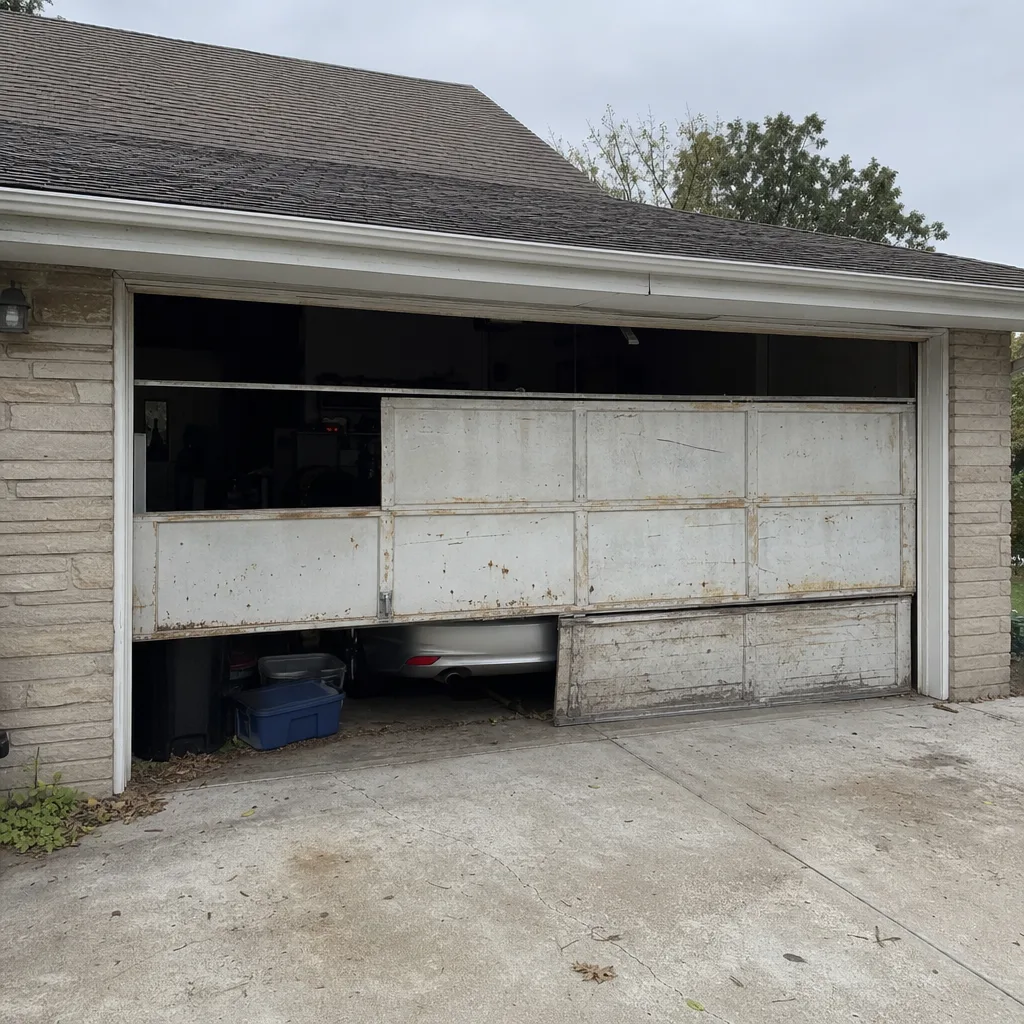
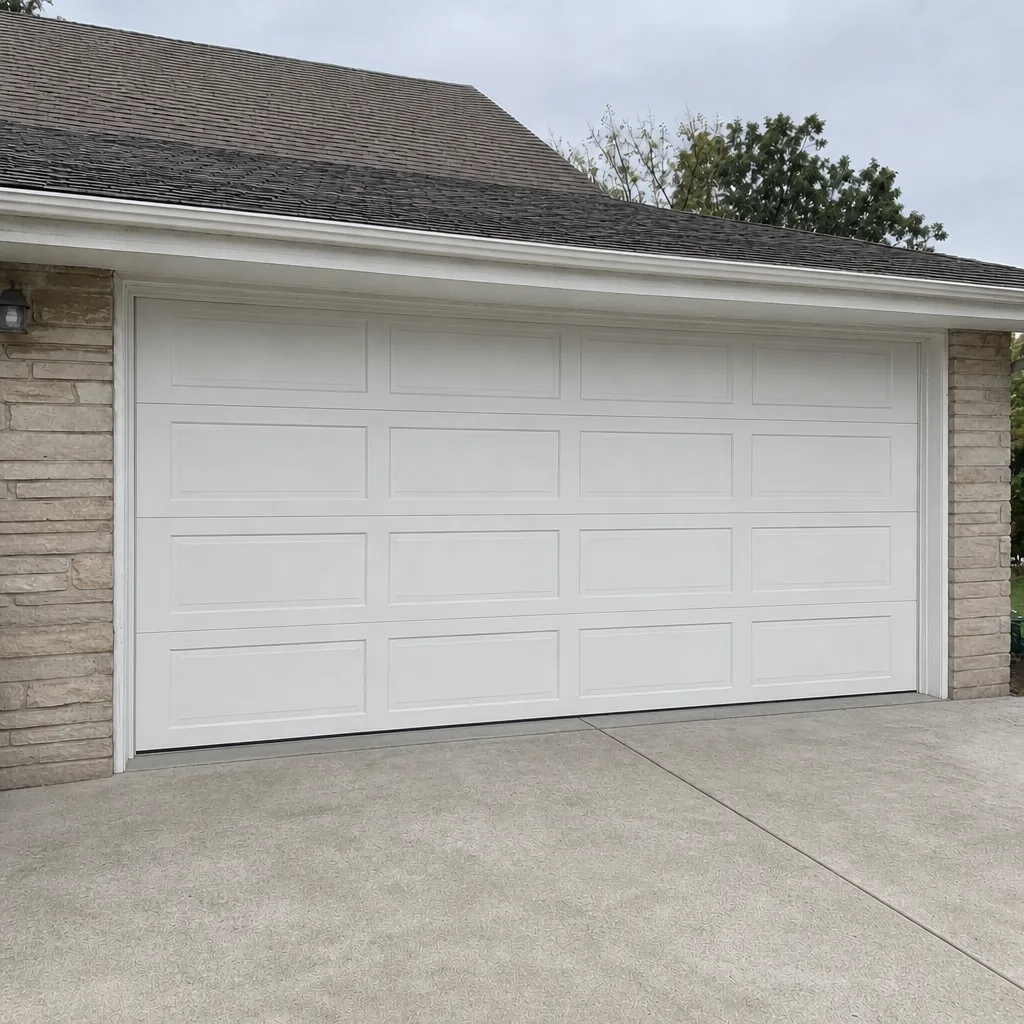
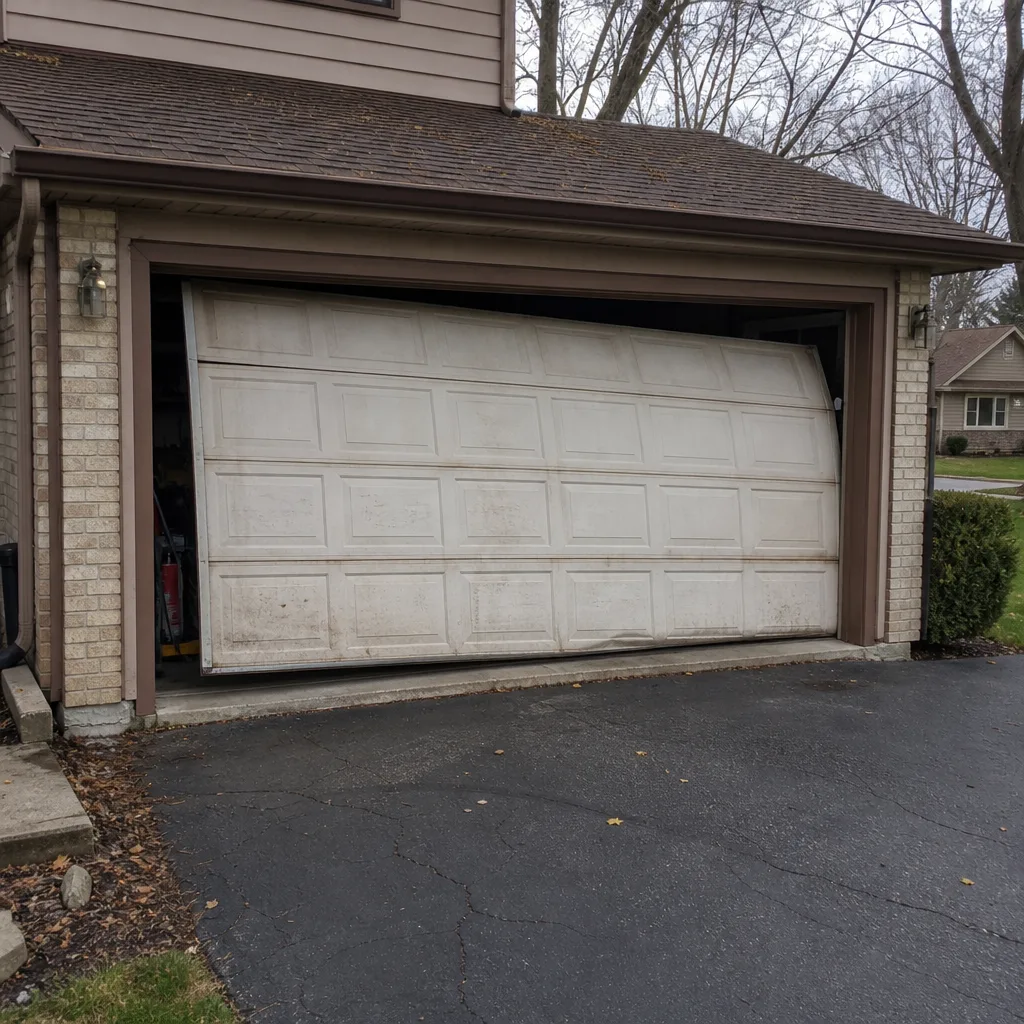
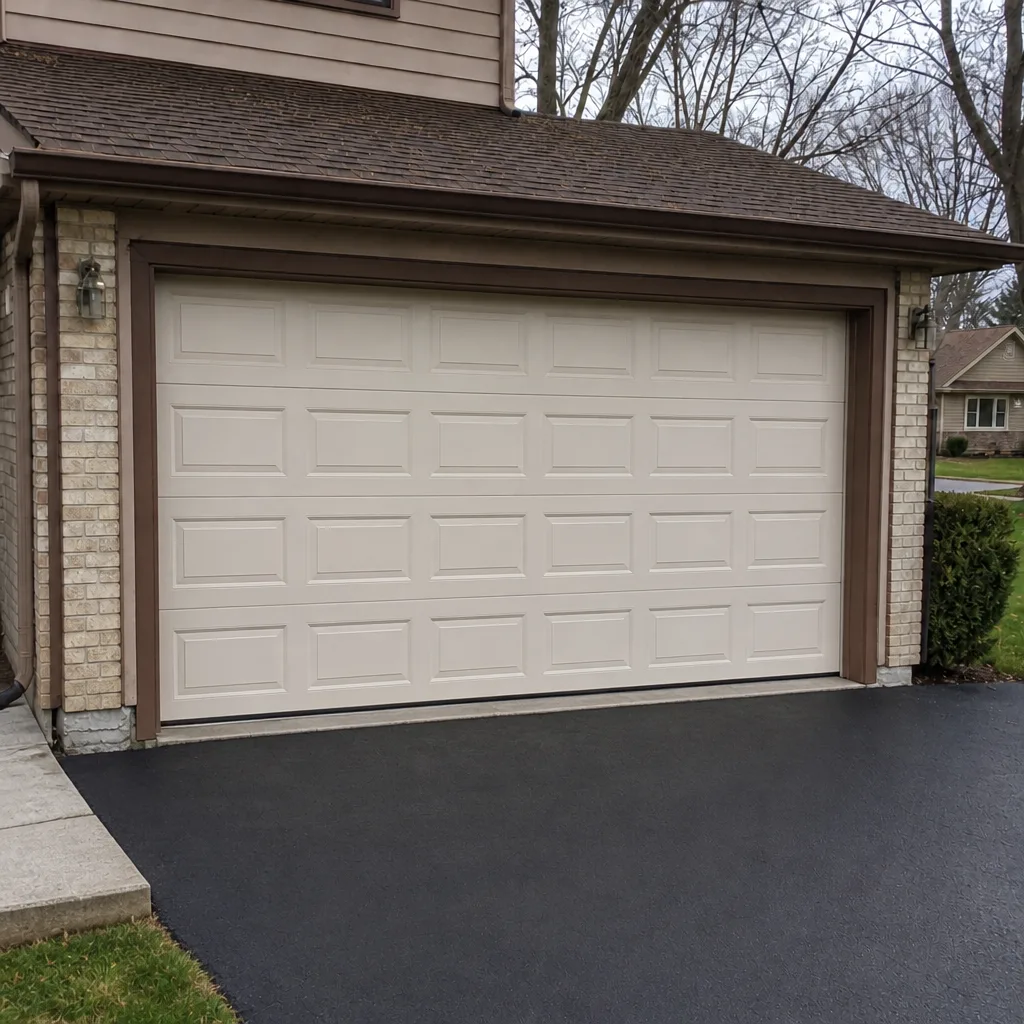
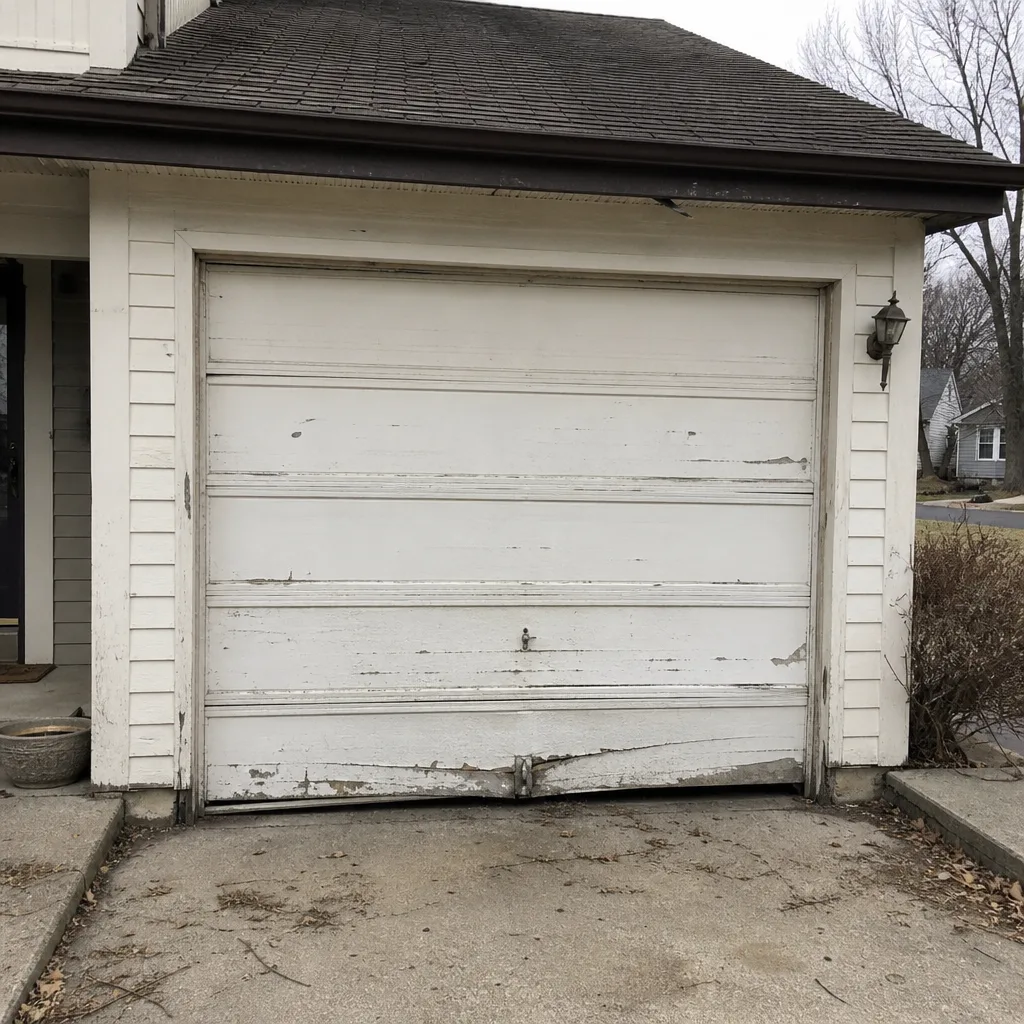
See the difference
 Before
 After
 Before
 After
 Before
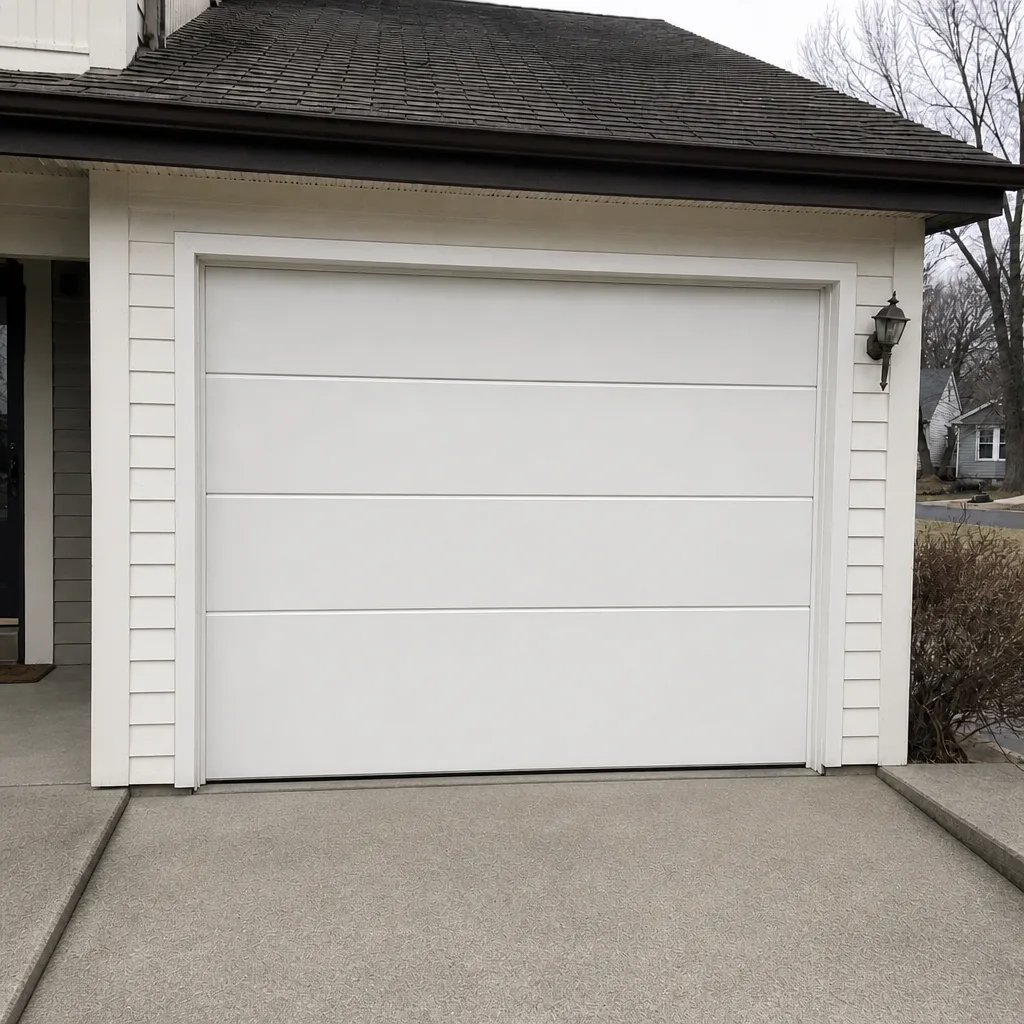 After
When to Call a Professional
Call a professional for any spring, cable, or track job, for any door that’s come off its rails, and for any opener that’s reversing unpredictably or failing to lift the door. Call when the door is unbalanced, when a bottom panel is bent, when the opener’s safety-reverse test fails, and when the door makes a noise you can’t identify after a lubrication pass. Also call when you’ve started a DIY repair and realized you’re in over your head – a professional arrival at that point is far safer and far cheaper than a completed attempt that goes wrong.
Naperville Garage Door Repair Co offers free estimates in Naperville, and our technicians are experienced with major brands including LiftMaster, Chamberlain, Genie, Clopay, Amarr, Wayne Dalton, Craftsman, and Raynor. Call (833) 513-8805. We answer 24/7. Fast dispatch from 7am to 7pm, Sunday through Friday. The written estimate sets the price before any work starts, and the local pro is licensed and insured as their state requires.
Frequently Asked Questions
No. Garage door torsion and extension springs store several hundred foot-pounds of energy even when the door is down, and a spring that unwinds uncontrollably can cause serious injury. The risk isn’t about your skill level; it’s about the physics of a wound spring releasing energy faster than anyone can react. Call (833) 513-8805 for a free estimate – our team handles spring repair as a dedicated service.
It can, in certain failure scenarios. Several major brands, including LiftMaster, Chamberlain, and Genie, treat homeowner-installed units differently when the failure traces back to force settings, an unbalanced door, or an improperly tested safety-reverse system. If you want to preserve the full warranty path, have a trained technician install the opener. Call (833) 513-8805 to talk through your options.
Pricing depends on the specific job, and the written estimate sets the final price. Some jobs are smaller than homeowners expect, and some are larger because a DIY attempt damaged additional components. The estimate is free, so the fastest way to get a number is to call (833) 513-8805 and describe what’s happening with the door.
You can safely replace the bottom weather seal, replace the exterior handle, change the keypad and remote batteries, and lubricate hinges, rollers, and springs twice a year. Those tasks cover the majority of routine maintenance and they extend the interval between professional service visits. Anything that touches springs, cables, or tracks should go to a pro.
We do offer same-day service on repair calls when the schedule allows. If the door is stuck open, someone is exposed to the weather or the home is insecure, call right away. Call (833) 513-8805. We answer 24/7. Fast dispatch from 7am to 7pm, Sunday through Friday.
Use white lithium grease on hinges and rollers, and a garage-door-rated silicone or lithium spray on the torsion spring. Avoid WD-40 as a long-term lubricant, avoid motor oil, and don’t lubricate the tracks at all. Apply a light coat twice a year and wipe off any excess before cycling the door.
The Bottom Line
The DIY-versus-professional question for garage doors isn’t a matter of pride. It’s a technical risk assessment, and the answer changes with each task. Weather seals, handles, batteries, and lubrication are genuinely safe to handle yourself, and doing them well extends the life of the door. Springs, cables, and tracks are a physics problem that no tutorial can prepare you for, and the cost of a failed attempt is usually higher than the original professional quote would have been. Opener installation is the gray zone – possible, but with warranty and safety considerations most homeowners don’t think about until something fails. If you want a second opinion on your specific door, or you’ve got a red-bucket job in front of you, our technicians are here.
Naperville Garage Door Repair Co works on every major garage door and opener brand, from a snapped spring on a 1990s Clopay door to a full new-door installation on a newer Naperville build. If you’re not sure where your job falls, call us and we’ll tell you honestly. Call (833) 513-8805 for a free estimate. We answer 24/7. Fast dispatch from 7am to 7pm, Sunday through Friday.
For a full look at what we do across the Naperville area, start at Naperville Garage Door Repair Co.
Written by the team at Naperville Garage Door Repair Co.